Barclays Is Cutting 5,000 Jobs and Naming AI as a Reason. It Will Not Say How Many Are in Britain.
Estimated reading time: 7 minutes
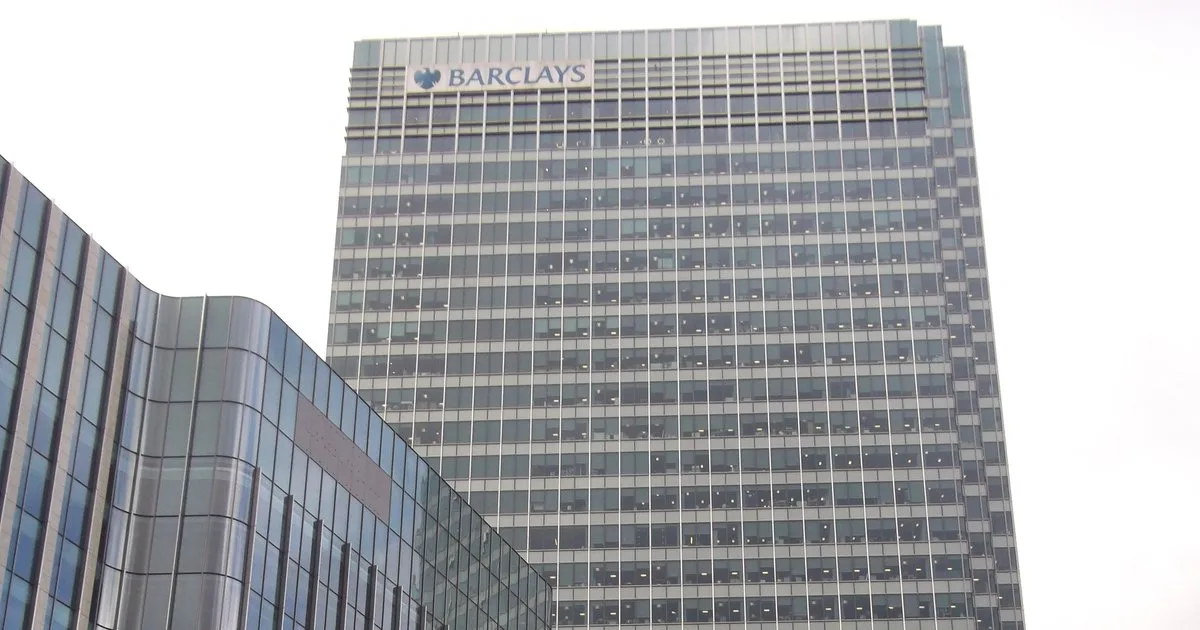

In short. Barclays confirmed alongside its Q3 2026 results on 22 October 2026 that it expects to cut around 5,000 full-time roles, roughly 5 percent of its workforce, with about 1,000 already gone and the rest by the end of the year [1]. Chief financial officer Anna Cross said "around 60% of the group actions relate to support functions, including fewer developers as AI makes our people more productive" [1]. Chief executive C.S. Venkatakrishnan then told reporters AI is "the icing on the cake, not the cake" [1] [2]. Unite general secretary Sharon Graham says Barclays is "using AI as an excuse to discard its loyal and long-suffering workforce" [2]. No source checked for this piece gives a UK figure. The ledger logs nothing for Britain, because there is no British number to log.
The company's own words name AI, in writing
This is not a media gloss on a vague restructuring. Barclays' own results materials describe the programme as "organisational simplification and technology change efficiency driven by AI," and CFO Anna Cross told analysts on the earnings call: "These actions involve an expected reduction of circa 5,000 full-time employees. Around 60% of the group actions relate to support functions, including fewer developers as AI makes our people more productive" [1]. That is a company naming AI as a driver of a specific category of job losses, in its own disclosure to shareholders, which is a stronger and rarer thing than the "AI Overviews" framing this ledger has had to strip out of media coverage of other employers' cuts.
The efficiency programme sits against a target of more than GBP1.1 billion in savings, which analysts expect to improve the bank's profitability from here [3]. The cuts were announced alongside a strong quarter: group net profit rose 13 percent to GBP1.65 billion and total income climbed 3 percent to GBP7.37 billion, with equities revenue up 47 percent year on year [3]. Barclays is not cutting jobs because the business is struggling; it is cutting jobs, by its own account, because AI lets fewer people do the same support-function work, while the parts of the bank that make money are doing well.
The same executive who signed off the disclosure then qualified it
Having put AI in writing, Barclays' chief executive spent part of the same day taking some of the weight off it. Venkatakrishnan told reporters: "I've often said that it is the icing on the cake, it's not the cake, because you need to do the infrastructure build to get the benefits of AI" [2]. His point, in context, is that years of technology infrastructure investment, data standardisation and process simplification are doing most of the work, with AI layered on top as an enhancement rather than the primary cause of the headcount reduction.
That is not a contradiction of Cross's statement so much as a narrower claim sitting underneath a broader one. The CFO's disclosure to shareholders names AI as part of the reason for roughly 3,000 job losses. The CEO's remarks to reporters the same day say AI is not the main reason for any of it. Both statements can be true if AI is the final, visible layer on a longer programme of technology change, which is exactly what Venkatakrishnan describes; but a reader relying only on the headline "AI making our people more productive" would not learn that the chief executive himself calls that framing the icing, not the cake.
This ledger's verdict on the AI claim is evidence insufficient. Barclays has named AI as a factor in roughly 60 percent of 5,000 job losses, in writing, to shareholders. Its own chief executive has since said, in his own words, that AI is not the primary driver. Neither statement, on its own or together, tells a British reader which roles, at which UK sites, were removed because of AI specifically, as opposed to the wider infrastructure and simplification programme Venkatakrishnan describes. "AI caused these redundancies" is Barclays' own partial framing of a global programme. It is not a finding about any specific British job, and this ledger will not promote it into one.
A union's counter-claim, equally unverified
Unite's response does not accept Barclays' framing either, from the other direction. General secretary Sharon Graham said the company is "using AI as an excuse to discard its loyal and long-suffering workforce," and argued Barclays should be upgrading staff skills rather than taking what she called a "short-term, kneejerk approach" [2]. Unite national officer Rick Coyle added that, as part of the Financial Service Skills Compact, Barclays should be reskilling workers for new technology including AI rather than cutting roles. This ledger records Unite's claim as the union's position, not as an established fact: "AI is a pretext" is just as unverified from outside the company as "AI made this necessary" is from inside it. Both are logged as claims, attributed to their source, neither adopted.
Britain is missing from Barclays' own account
Barclays has run a ring-fenced UK retail bank since 2015, and has told Britain nothing about this programme specifically. Barclays Bank UK PLC was incorporated on 19 August 2015 and is registered at 1 Churchill Place, Canary Wharf, the same address as the group's wider headquarters [4]. No source checked for this piece, including Barclays' own results materials, breaks the 5,000 figure down by country. Cross told analysts that "Barclays UK has taken more structural cost actions than planned," pointing to GBP110 million of structural cost actions driving a cost rise in that segment this quarter, but that is a cost figure, not a jobs figure, and it is not stated as part of the 5,000 [1]. One workforce-data provider estimates Barclays UK's headcount at around 10,190, a third-party figure, not a company disclosure, and no use for converting a global percentage into a British number without guessing [3].
This is the same gap this ledger has already logged against Oracle and HSBC's wealth business: a company discloses a global or percentage figure, names AI as part of the cause, and gives nothing a UK reader can check against a UK number. The pattern is now familiar enough to name. A British bank headquartered in London, regulated by UK authorities, employing staff under UK law, can say in writing that AI is reducing the need for developers, and can do so without saying whether a single one of those developers works in Britain.
How the ledger logs it
Nothing, yet, and that is the finding. Barclays' 5,000 is ANNOUNCED and global. Its GBP1.1 billion savings target is ANNOUNCED and global. Its AI framing is the company's own, in writing, and equally global. The UK impact is understood to exist, since Barclays UK is explicitly named as part of the group's wider cost actions, but it is not counted, because no source gives it a number. A row goes into this ledger the day Barclays, a union, or a UK regulatory filing puts a British figure on the record, and not before.
What happens next in this ledger
Watch for Barclays UK's own annual report, which will eventually show a headcount for the ring-fenced bank specifically, the same way LifeScan Scotland's accounts surfaced a redundancy figure months after the fact elsewhere on this ledger today. Watch too for whether Unite or the Financial Service Skills Compact publish their own UK estimate, which would at least put a disputed number on the record where none exists now. And watch the tension this piece opens with: a chief financial officer naming AI in a disclosure to shareholders, and a chief executive calling that same explanation the icing, not the cake, on the same day. That gap between what a company files and what its own leadership says out loud is exactly the kind of claim this strand exists to hold open until the evidence closes it.
Sources
- The Motley Fool, "Barclays (BCS) Q3 2026 Earnings Call Transcript," 22 October 2026 (Anna Cross on the 5,000 FTE reduction and "fewer developers as AI makes our people more productive"; C.S. Venkatakrishnan's "icing on the cake" remarks; Barclays UK structural cost actions). https://www.fool.com/earnings/call-transcripts/2026/10/22/barclays-bcs-q3-2026-earnings-call-transcript/
- AOL/BBC, "Barclays CEO Calls AI 'Icing On The Cake' As 5,000 Jobs Get Axed," 22 October 2026 (full "icing on the cake, it's not the cake" quote; Sharon Graham and Rick Coyle quotes; 1,000 already cut, 4,000 by year end). https://www.aol.com/articles/barclays-ceo-calls-ai-icing-161439000.html
- Euronews, "Barclays to cut 5,000 jobs as it turns to AI to improve efficiency," 22 October 2026 (Q3 financial results, GBP1.1bn savings target, no UK breakdown, analyst commentary). https://www.euronews.com/2026/10/22/barclays-to-cut-5000-jobs-as-it-turns-to-ai-to-improve-efficiency
- Companies House, company overview, BARCLAYS BANK UK PLC, company number 09740322 (incorporated 19 August 2015, registered office 1 Churchill Place, Canary Wharf, London). https://find-and-update.company-information.service.gov.uk/company/09740322