A Bristol Defence Firm Just Promised 100 New Jobs. It Currently Employs About 120 People, Total.
Estimated reading time: 5 minutes
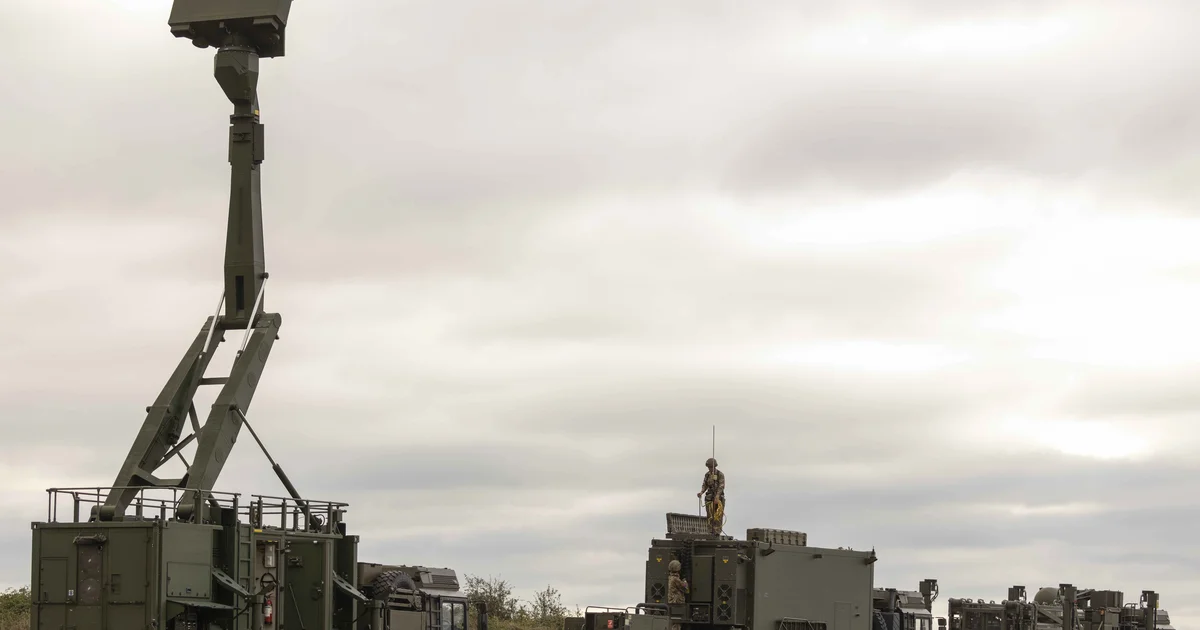

In short. MARSS Systems, a Bristol defence-technology company owned by Australia's Electro Optic Systems, says it will create 100 new UK jobs after Kuwait signed a GBP 370 million deal for its NiDAR air-defence command-and-control platform, announced by the Department for Business and Trade on 9 October 2026 [1]. MARSS's own head of recruitment says the company has grown to "120+ and counting" staff [2], so the 100 roles promised are not a department being added to an established prime contractor; they are close to a second company bolted onto the first. The ledger logs an announced gain of 100, graded ANNOUNCED, sector manufacturing, region south-west, ai_cited: not-raised, with no completion date given and review dates set for October 2027 and October 2028.
The number is nearly as big as the company making it. MARSS was founded in 2005 by Johannes Pinl, who remains chief executive, with production now based at the company's Bristol site named in the gov.uk release [1] [2]. Susan Verschuren, the company's head of recruitment and HR, is quoted on its own website saying she has "been instrumental in growing MARSS from 29 employees to 120+ and counting today" [2]. Electro Optic Systems, the Australian-listed defence group, completed its acquisition of MARSS on 21 May 2026, calling the deal a strategic step from supplying individual weapon systems to providing integrated, turnkey counter-drone systems that combine its own kinetic and laser-based weapons with MARSS's AI-enabled command-and-control capability [3]. Against that roughly 120-person base, a promise of 100 more roles at one site is not routine hiring; it is a bet that the company looks substantially different a year from now than it does today.
What Kuwait is actually buying
A GBP 370 million order for a layered air-defence system, not a single piece of kit. The Department for Business and Trade's release describes Kuwait's purchase as covering radars, jammers and interceptors from several suppliers, integrated through MARSS's NiDAR platform, which the release calls an AI-enabled command and control centre [1]. MARSS chief executive Johannes Pinl said: "Countering drones and aerial threats is not about any single system, it is about an intelligent, layered architecture that detects, decides and defeats within seconds" [1]. The deal sits under Taskforce Sabre, the UK government-industry programme for Gulf state defence exports, and follows an earlier UK supply of the Rapid Sentry ground-based air-defence missile system to Kuwait; RAF personnel already operate a system called ORCUS there [1]. Integration work is expected to run through 2027, though that date applies to delivering the Kuwaiti system, not to when the 100 UK roles exist.
The AI in the headline is not the AI this ledger tracks
"AI-enabled" sells the product. It says nothing about why anyone is being hired. The gov.uk release puts "AI-enabled" in its own headline, which makes this exactly the kind of story the Machines strand exists to check, and exactly the kind that turns out not to qualify. MARSS's AI is a feature of NiDAR: software that fuses radar, radio-frequency detection and electro-optical cameras to classify a threat and recommend a response faster than a human operator alone, a capability the company sells to Kuwait as the product [1]. Nobody involved is claiming that AI created these 100 jobs in the causal sense this ledger tests, the way an employer might claim automation let it cut a workforce; MARSS needs more engineers and production staff because it sold more systems, the same reason any contractor hires after winning a bigger order. The row is logged ai_cited: not-raised, not because AI is absent from the story, but because nobody is making the specific attribution claim the strand exists to hold to evidence.
How the ledger logs it
An announced gain of 100, dated 9 October 2026, with no date attached to when the roles land. Like MicroAGI's 180-job London promise on 8 October, this clears the bar for a full row rather than a diffuse target: one named employer, MARSS Systems, committing to one named site, Bristol, tied to one dated contract. It also shares MicroAGI's gap: the release gives a 2027 integration timeline for delivering Kuwait's system, not a hiring deadline for the 100 posts, so the review dates carry the weight a company deadline would otherwise do. The first check, in October 2027, is a straightforward headcount question against a public "120+" baseline that MARSS itself put on record before the deal was announced.
What happens next in this ledger
Review dates are set for 9 October 2027 and 9 October 2028. The first is a plain count: how many of the 100 roles exist at a company that told its own staff, before this contract, that it employed about 120 people worldwide. A defence contractor with a signed GBP 370 million order has more reason than most to hit a hiring target; a company this size failing to would be unusually visible.
Sources
- GOV.UK, "100 new UK jobs created as Kuwait buys British-made AI-enabled air defence systems," Department for Business and Trade, 9 October 2026 (quoting Minister for Defence Readiness and Industry Luke Pollard and MARSS chief executive Johannes Pinl). https://www.gov.uk/government/news/100-new-uk-jobs-created-as-kuwait-buys-british-made-ai-enabled-air-defence-systems
- MARSS, "Our Leadership" (Susan Verschuren, Head of Recruitment & HR). https://marss.com/about/our-leadership/
- Electro Optic Systems (EOS), "Completion of MARSS Acquisition," 21 May 2026. https://eos-aus.com/news/completion-of-marss-acquisition/