HSBC Is Cutting Up to 70 Percent of Its UK Financial Advisers. It Will Not Say How Many People That Is.
Estimated reading time: 6 minutes
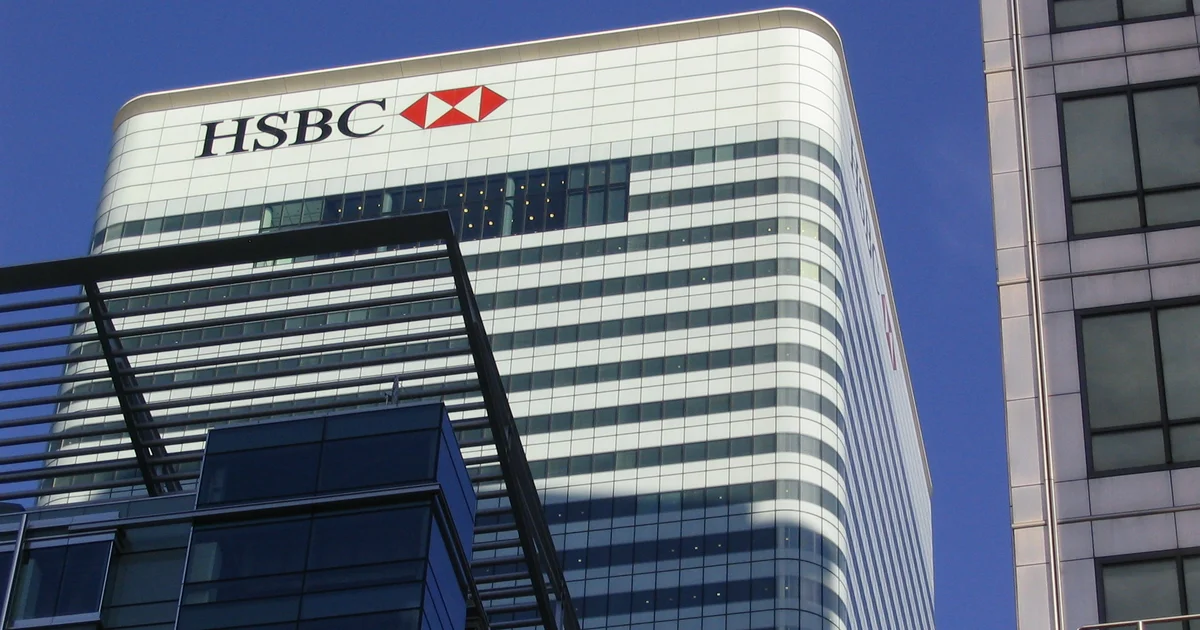

In short. HSBC is consulting on cuts to its UK wealth management business: around half of management and specialist roles, and as much as 70 percent of financial adviser roles, with affected staff expected to leave by the end of October 2026 [1]. HSBC does not publish a headcount for the division, so neither of those percentages converts to a number [2]. Press coverage has called this an AI push; HSBC's own statement on the cuts talks only of "digitally enabled products and journeys" and never mentions AI [1]. The ledger's verdict is evidence insufficient, no row is logged because no figure has been given, and this is the third time in two weeks this ledger has found the same gap between an AI headline and an employer's own words.
What HSBC has actually confirmed
HSBC is consulting with staff in its UK wealth management arm over cuts that, according to the Financial Times and corroborated by several outlets that read the same reporting, would remove roughly half of the division's management and specialist roles and around 70 percent of its financial adviser roles [1] [2]. Staff whose roles go are expected to leave the bank by the end of October 2026, with the consultation running through the same month [2].
Asked about the cuts, HSBC gave this statement: "HSBC UK is a long-established, leading UK wealth manager and premium banking provider. We're continuing to evolve to deliver more digitally enabled products and journeys to support our best-in-class wealth service and meet the changing needs of our customers" [2]. That sentence does not confirm a redundancy figure, does not name AI, and does not say how many roles the "evolving" removes. It is the only on-record company comment addressed specifically to this round of cuts that any source checked for this piece could find.
HSBC does not publish how many people work in its UK wealth business. Reporting describes "hundreds" of relationship managers nationally, a figure nobody has pinned down more precisely, and HSBC's own practice is not to disclose it [3]. Half of an unpublished number, and 70 percent of a different unpublished number, cannot be added into a headcount. That is arithmetic, not scepticism about the story: the percentages are real, reported from inside the bank, and nobody outside HSBC can turn them into a count of people.
The AI claim is the coverage's, not HSBC's
Several headlines this week describe the cuts as part of an "AI push" [4]. None of the reporting checked for this piece quotes anyone at HSBC saying that AI is the reason staff in this specific round are leaving. The closest the bank's own public record comes is two statements, both made in a different context from this consultation.
The first is from HSBC's own website, in a strategy article published on 27 July 2026 under the heading "Our strategy, built on trust, accelerated with AI." It quotes chief executive Georges Elhedery: "We are empowering relationship managers with AI to help them serve customers faster, while at the same time personalising the experience by providing more relevant customer support" [5]. The same article says AI will "impact some jobs, transforming others and creating entirely new roles" across the group, worldwide, over an unspecified period [5]. It does not mention the UK wealth business, a redundancy figure, or October 2026.
The second is older and blunter. At an investor day in May 2026, Elhedery told shareholders: "Generative AI will destroy certain jobs" [6]. That is a general statement about the bank's view of AI's effect on employment, made five months before this consultation opened, to an audience of investors rather than staff, and not attached to any division or number.
Put together: HSBC's chief executive has said AI will remove some jobs across the group, and separately said AI tools will help relationship managers serve customers, and separately again the bank has declined to attribute this specific round of UK cuts to anything beyond "evolving" products. No source checked shows HSBC itself drawing a line from the AI strategy to the October consultation. Under this ledger's four verdicts, that gap is evidence insufficient: not unsupported, because HSBC's own words do connect AI to the shape of its wealth business in general; not consistent with the evidence, because nobody at HSBC has said AI caused this round specifically; and not contradicted, because HSBC has not denied it either. The honest label is the one in between.
The third round of this exact gap in two weeks
This ledger has now found the same shape of story three times inside two weeks. BBC Media Tech confirmed 110 compulsory redundancies in September, and coverage reported that the corporation would "replace jobs with AI," but the only on-record quote from the BBC's own chief operating officer was about handling the redundancy process with care, not about AI. Future plc's second 2026 redundancy round at Android Central, Tom's Guide and TechRadar is widely reported as driven by falling search traffic from Google's AI Overviews, but Future's own chief executive, in a staff memo, attributed it to "significant, ongoing changes in our industry, primarily driven by the decline in search," a sentence that does not use the word AI.
In all three cases the employer has a public, on-record reason for job losses, media coverage reaches for an AI explanation the employer has not given, and the company has neither confirmed nor denied it. A single instance could be one journalist's shorthand. Three, across a broadcaster, a magazine publisher and a bank, each covering a different story in a different sector within the same fortnight, is a pattern this ledger exists to document: not proof that AI is or is not the cause, but proof that the public explanation and the employer's own words have stopped matching, repeatedly, right as AI becomes the easiest line to write.
Why no row is logged
This ledger counts a job as lost only when a source gives a number. HSBC's cuts are real: a consultation is running, a statement confirms change is under way, and two percentages have been reported from inside the bank. None of that is a headcount. The scoreboard this site runs from data/events.csv logs a figure only when one exists to log; inventing one by multiplying a reported percentage against an unconfirmed "hundreds" would be exactly the kind of unsourced number this ledger was built to avoid printing. So the row stays empty, the same way it stayed empty for Oracle's unstated British headcount in September, until HSBC, a union, or a regulatory filing puts a number on the record.
What would move this
A headcount would do it immediately: HSBC confirming how many roles are affected, or a union such as Unite putting a figure on its own exposure, the way the Communication Workers Union named "approximately 200" affected members inside Royal Mail's much larger announced total earlier this month. So would HSBC, at any point, saying in its own words that AI is the reason for this round, which would move the verdict from evidence insufficient to attribution consistent with evidence. Equally, a clear statement that AI is not the reason would move it the other way, the same path British Gas and Admiral have already taken this year when they said plainly that AI was not behind their own cuts. Until one of those things happens, what is published is a company that will confirm the shape of the cuts and decline to confirm either the size or the cause.
Sources
- Yahoo Finance UK (Bloomberg), "HSBC plans UK wealth management job cuts," 7 October 2026 (HSBC statement on "digitally enabled products and journeys", percentages, consultation and departure timeline). https://uk.finance.yahoo.com/news/hsbc-plans-uk-wealth-management-085445546.html
- Sharecast, "HSBC planning job cuts in UK wealth management arm in AI push - report," 7 October 2026 (HSBC statement in full, consultation period, end-of-month departure timeline). https://www.sharecast.com/news/news-and-announcements/hsbc-planning-job-cuts-in-uk-wealth-management-arm-in-ai-push---report--23778742.html
- The Wealth Advisor, "HSBC Is Cutting Up To 70% Of Its UK Financial Advisers As AI Moves Into Wealth Management," 7 October 2026 ("hundreds" of relationship managers, no disclosed headcount). https://www.thewealthadvisor.com/article/hsbc-cutting-70-its-uk-financial-advisers-ai-moves-wealth-management
- Cryptobriefing, "HSBC plans job cuts in UK wealth business as part of AI push," 7 October 2026. https://cryptobriefing.com/hsbc-uk-wealth-job-cuts-ai/
- HSBC, "Our strategy, built on trust, accelerated with AI," hsbc.com, 27 July 2026 (Elhedery quote on relationship managers and AI; "impact some jobs, transforming others and creating entirely new roles"). https://www.hsbc.com/news-and-views/views/hsbc-views/our-strategy-built-on-trust-accelerated-with-ai
- Inside AI News, "HSBC Plans Sweeping Job Cuts in UK Wealth Business Amid AI Push," 7 October 2026 (Elhedery's May 2026 investor day quote, "Generative AI will destroy certain jobs"). https://insideai.news/news/ai-in-business/hsbc-ai-job-cuts-uk-wealth-management/13747/
- Private Banker International, "HSBC on hiring spree to boost wealth management in the UK," 9 September 2024 (HSBC's own quote on its Top 5 wealth manager ambition and AUM-doubling target, "hundreds of bankers" hiring push). https://www.privatebankerinternational.com/news/hsbc-on-hiring-spree-to-boost-wealth-management-in-the-uk/