British Gas Is Cutting 1,300 Call Centre Jobs. It Says the Chatbots Have Nothing to Do With It.
Estimated reading time: 6 minutes
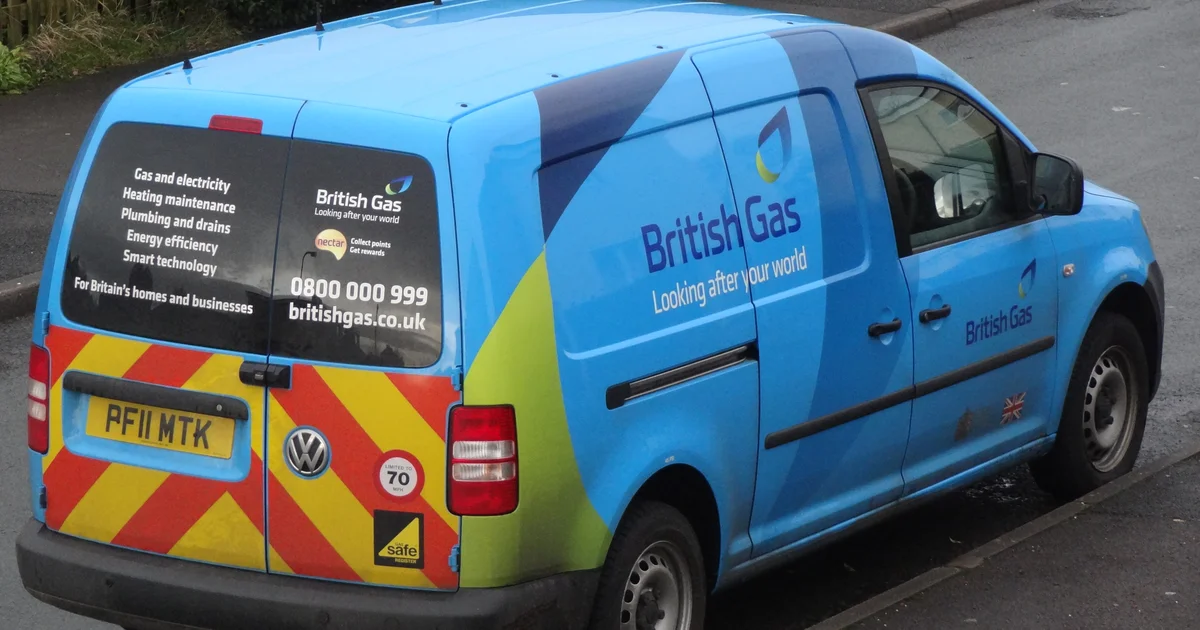

In short. Centrica opened consultation on about 500 British Gas customer service roles on 12 June 2026, across Glasgow, Edinburgh, Cardiff, Leicester, Stockport and Leeds [1]. On 23 July, alongside half-year results, it confirmed a further 800 cuts, for 1,300 over two years, about 14 percent of the customer operations workforce [2]. Chief executive Chris O'Shea says changing customer behaviour is the cause, not AI. The GMB says the jobs are going to chatbots. The ledger logs a loss of 1,300, graded ANNOUNCED, region UK-wide, ai_cited: no, matching the company's own stated position.
The announcement came in two parts. British Gas told staff on 12 June that around 500 roles in its customer operations teams, spread across Glasgow, Edinburgh, Cardiff, Leicester, Stockport and Leeds, could go under a consultation on voluntary redundancy [1]. Six weeks later, on 23 July, parent company Centrica confirmed the shape of the wider plan alongside its half-year results: 800 more roles on top of the 500, taking the total to 1,300 over two years, close to 14 percent of the customer operations team, with further reductions in outsourced offshore support [2]. Centrica employs about 19,000 people worldwide, of whom roughly 16,000 work for British Gas in the UK [2].
What British Gas says caused it, and what it announced in the same breath
Two claims sit inside the same set of announcements, and they pull in different directions. Asked directly about the role of automation, chief executive Chris O'Shea said on the results call that increasing investment in AI and technology upgrades "was not driving these particular job reductions," attributing them instead to "changing customer behaviour," with about 90 percent of customers now going digital-first and average customer contact down 20 percent year on year [2]. Back in June, a company spokesperson had put the same point more bluntly: "The suggestion these roles are being replaced by AI or new chatbot technology is simply wrong. Customer behaviour is changing, with inbound contact down by around 31 percent since 2023" [1]. Yet the same 23 July announcement that carried O'Shea's denial also described the cuts as part of a "transformation programme," which Centrica itself said "included the deployment of AI tools" [2]. Both statements are the company's own words, three weeks apart in the same disclosure, and this ledger records both rather than picking the tidier one.
The GMB reads the same facts the other way. Charlotte Brumpton-Childs, the union's national secretary, said in June: "It's an absolute disgrace British Gas is slashing hundreds of human jobs and giving them to chatbots" [1]. That is the union's claim, not this ledger's finding, exactly as O'Shea's denial is the company's claim and not this ledger's finding either. Neither side has published the kind of evidence that would settle it: British Gas has not disclosed what share of the "90 percent digital-first" contact is handled by AI chatbots specifically, as opposed to a human-designed app or web form that involves no AI at all, and the GMB has not published its own figures on how many of the 1,300 roles have already been mapped onto a named automated system.
Where independent evidence points, and where it runs out
On customer preference, at least one outside data point cuts against the company's framing. A survey of UK consumers by the customer experience firm 8x8, published 16 October 2025, found 83 percent preferred speaking to a real person for support, against 4 percent who preferred a virtual agent or chatbot [3]. That is a general UK finding, not a measurement of British Gas's own customers, and it does not on its own prove anything about why this specific 1,300 fell where it did. What it does is puncture the cleanest version of the company's story, that customers are moving to digital channels because they prefer them: a "digital-first" contact figure is also consistent with channels being designed, priced or queued in a way that pushes customers there regardless of preference, which is a different claim from the one British Gas is making.
Under this strand's verdict vocabulary, the honest label here is evidence insufficient. The company's own volume data (a 20 to 31 percent drop in contact, depending on which figure is used) is real and would reduce headcount needs on its own, with or without AI. Its own language also ties the same programme to AI tool deployment, which is not nothing. Neither fact, nor the GMB's assertion, nor the 8x8 survey, adds up to proof that specific roles were replaced by specific automated systems, which is the bar this ledger sets before calling an attribution claim consistent with the evidence or contradicted by it. That gap, not a verdict either side would prefer, is what gets logged.
How the ledger logs it
A loss of 1,300, graded ANNOUNCED, region UK-wide, ai_cited: no. The figure and both dates come from Centrica's own statements to staff and to the market, not from a Gazette filing, so it stays ANNOUNCED under this site's rules. The ai_cited field is logged as no because it tracks the employer's own attribution, and British Gas's stated position, repeated on 12 June and again on 23 July, is that AI is not the cause. That field says nothing about whether the GMB's competing claim is right; it says only what the company itself is willing to put its name to.
What happens next in this ledger
The cuts run over two years, which gives this site two years of opportunities to check whether the roles that go are backfilled, in whole or in part, by AI tools with names, budgets and measurable resolution rates, the kind of evidence that would move this row off evidence insufficient in either direction. A company that cuts 1,300 customer service jobs while telling investors about AI deployment in the same disclosure has given itself very little room to argue, if the pattern repeats, that the two facts are unconnected.
Sources
- Yahoo News UK, "Union says workers 'being replaced by AI' as British Gas cuts 500 jobs," 12 June 2026 (GMB statement, company denial, affected locations). https://uk.news.yahoo.com/union-says-workers-being-replaced-153047309.html
- Personnel Today, "Centrica to axe 1,300 jobs in next two years," Adam McCulloch, 23 July 2026 (total figure, CEO quote, transformation programme and AI tools language, headcount). https://www.personneltoday.com/hr/centrica-to-axe-1300-jobs-in-next-two-years/
- 8x8, Inc., "Report: UK Customers Still Prefer Human Support Over AI," 16 October 2025 (Streetview survey figures on customer preference for human versus chatbot support). https://finance.yahoo.com/news/report-uk-customers-still-prefer-080000111.html