BAE Systems Wants to Cut 1,070 Jobs. Its Own Union Says the Problem Is the Government, Not the Company.
Estimated reading time: 5 minutes
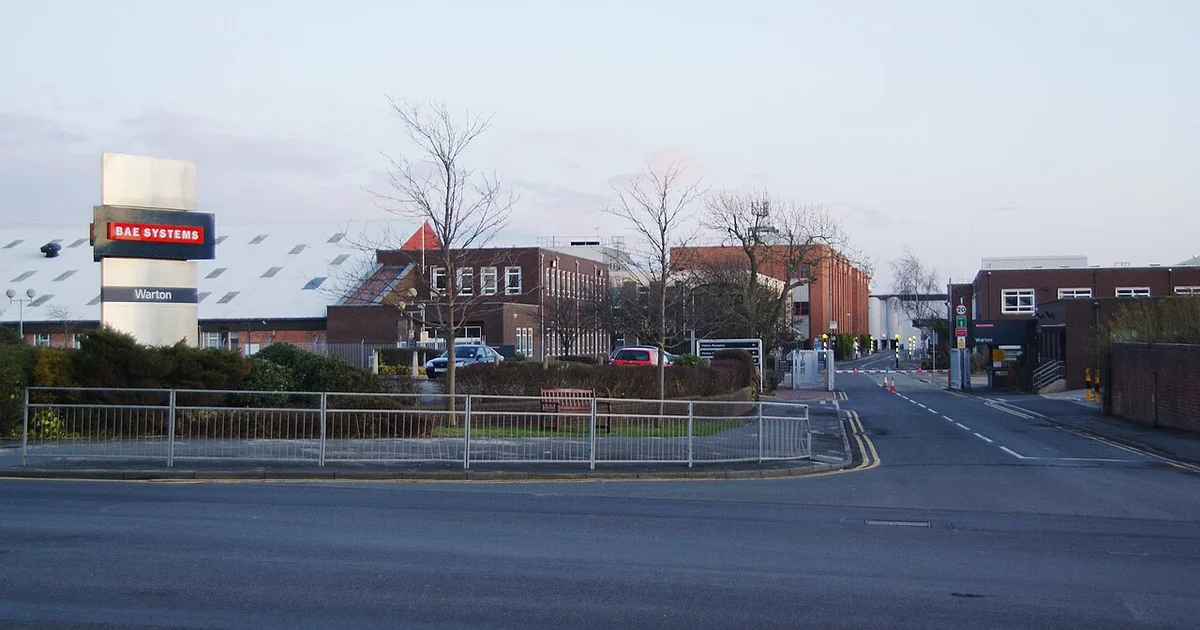

In short. BAE Systems said on 18 November 2026 that it plans to cut 1,070 UK roles, mainly through voluntary redundancy, across its air sector sites at Warton and Samlesbury in Lancashire and its London head office [1]. Shop-floor manufacturing, aircraft maintenance and early-careers roles are excluded. This ledger logs a loss of 1,070, graded ANNOUNCED, status proposed, region uk-wide. AI is not cited anywhere in the company's statement or the union reaction.
The numbers
BAE Systems, Britain's largest defence contractor, told staff on Wednesday that 1,070 roles are at risk, the bulk of them in its air sector business based at Warton and Samlesbury, with a further tranche at its London head office in Stirling Square [2]. The company says the cuts will be achieved "mostly" through voluntary redundancy [1]. Shop-floor manufacturing, aircraft maintenance and early-careers trainees are all explicitly excluded, which narrows the cut to office-based engineering, programme and support functions rather than the production line itself.
The company's own framing is corporate and procedural: this is, in its words, "the next stage of our ongoing focus on enhancing our agility and competitiveness, so we can help to maximise the value of every pound our customers spend on defence." It has paired the announcement with a claim to be investing elsewhere "to enhance performance, accelerate innovation and boost capacity" [1].
A profitable company, cutting jobs anyway
The cut lands awkwardly against the company's own results. BAE Systems reported strong financial performance this year, and one outlet's headline on the announcement made the contrast explicit: a defence giant cutting a thousand jobs "despite strong financial performance" [3]. Nothing in the reporting checked for this piece suggests the company is in financial difficulty. The stated reason is organisational, not a response to falling revenue or profit.
The union is not blaming BAE
What makes this announcement different from most on this ledger is where the union chose to point the finger. Unite general secretary Sharon Graham responded to the cuts not with criticism of BAE Systems itself but with a warning aimed squarely at the government: "We won't have a manufacturing industry left" without ministers making "critical decisions" on defence spending [3]. Graham's argument is that delays in signing off contracts, including for British-built Typhoon jets and the Collaborative Combat Aircraft programme, are what is actually forcing decisions like this one, and that the fix is for government to move on those contracts, not for BAE to be pressured into holding headcount it cannot otherwise justify.
That is a notable departure from the usual shape of a redundancy story on this ledger, where a union disputes a company's own account of events or presses for a bigger number. Here, the union's account and the company's account point in roughly the same direction: neither says this is about the company's underlying health, and neither claims the jobs are gone for good if the contracts land.
What is not in this story
AI is not mentioned anywhere in the reporting checked for this piece, not by the company and not by the union. This is a defence-spending-timing story, not a technology one, and it joins this ledger's growing list of cuts attributed to something other than automation: tariffs, traffic decline, insolvency, and now procurement delay.
Nor is there yet a final number. BAE's own framing, "mostly" voluntary, leaves open how many of the 1,070 roles might end up compulsory if not enough staff come forward, the same uncertainty that sits behind Jaguar Land Rover's 4,000-job voluntary programme elsewhere on this ledger. The distinction matters for anyone affected, and this ledger will be checking for a concluded figure.
How the ledger logs it
A loss of 1,070, graded ANNOUNCED because this is a company statement with a defined voluntary target, not yet a filing or a confirmed departure count. Status: proposed. Region: uk-wide, because the cut spans Lancashire's Warton and Samlesbury sites and London's head office, rather than sitting in one region the way most of this ledger's rows do. Sector: manufacturing, the closest fit this ledger's taxonomy offers for a defence and aerospace employer. AI not cited.
What happens next in this ledger
A voluntary redundancy programme at a profitable company, blamed by its own union on government procurement delay rather than on the company, is an unusual enough combination that this ledger will be watching for two separate things: whether the government moves on the Typhoon and Collaborative Combat Aircraft contracts Unite is demanding, and whether BAE's "mostly voluntary" cut stays voluntary once the numbers are in.
Sources
- mlq.ai, "BAE Systems plans to cut 1,070 UK jobs in its air sector and head office," 18 November 2026. https://mlq.ai/news/bae-systems-plans-to-cut-1070-uk-jobs-in-its-air-sector-and-head-office/
- CityAM, "FTSE 100 defence giant BAE to cut over 1,000 jobs," 18 November 2026. https://www.cityam.com/ftse-100-defence-giant-bae-to-cut-over-1000-jobs/
- Yahoo News UK, "BAE Systems to slash 1,000 jobs despite 'strong financial performance'," 18 November 2026. https://uk.news.yahoo.com/bae-systems-slash-1000-jobs-165047359.html